The right stool test depends on your pet's age, symptoms, and history, because the tests in common use look for three different things. A fecal float finds worm eggs and works well as a yearly screen for a healthy adult on prevention. Antigen testing hunts for parasite proteins rather than eggs, which is how it catches the Giardia a float often misses, and PCR identifies the DNA of a long list of organisms at once. The choice matters because the wrong test can leave a treatable infection running for weeks, and a few of these parasites spread to people.
Families ask us the same two questions before anything else: where did my pet pick this up, and can the kids catch it? Creature Comforts Veterinary Service in Saylorsburg runs urgent parasite screening in our own lab, and we can order a broader panel when the first result does not fit what you are seeing at home or if we’re worried about certain organisms. For a healthy pet already on prevention, that same screening is built into wellness and preventive care once a year. If loose stool keeps returning, bring us a sample and we will start with the test that fits your pet's age and symptoms.
Stool Testing: What to Know First
- Many intestinal parasites go weeks without causing a single soft stool, so screening matters even in a pet who looks fine.
- A negative fecal float tells us no eggs were visible in that sample on that day, not that your pet is in the clear.
- Antigen testing finds parasite proteins, so it picks up Giardia when a float reads clean.
- PCR reads DNA, which is how a stool panel finds bacteria and viruses.
Why Did My Pet's Stool Test Come Back Negative?
A negative float means no eggs showed up in the sample we looked at that day, which is reassuring without being proof. A pet can be carrying worms, Giardia, or a bacterial infection and still give you a clean result, and that gap matters most when your dog or cat is still having soft stool.
- Shedding comes in waves: Giardia is the classic example. Cysts come out in bursts rather than steadily, and the sample you carried in may have landed in one of the quiet stretches.
- The infection is too new: Worms need time after they're swallowed to mature and start laying eggs, so a pet who picked something up recently can read clean.
- A light worm burden: A handful of adults may produce too few eggs to land on the slide, which is why we sometimes ask for a second sample later.
- Nothing lays eggs: Bacteria, viruses, and some protozoa don't produce eggs at all, so flotation was never going to find them.
- The sample wasn't up to the job: Stool that dried in the grass overnight, or a scraping too small to work with, limits what any method can tell us.
When Does My Pet's Diarrhea Need More Than a Stool Test?
Blood in the stool, diarrhea with vomiting that brings water right back up, or a puppy or kitten who stops drinking all need an exam before any sample reaches the lab. An unvaccinated puppy or kitten with sudden vomiting and bloody diarrhea needs to be seen the same day, because parvovirus and feline panleukopenia spread through stool and move fast enough that hours matter. Dehydration is what puts puppies and kittens in real trouble, and it builds within hours at that size.
Other patterns need an appointment even when your dog or cat seems bright:
- Steady weight loss.
- A pot-bellied puppy or kitten.
- Scooting, or a rice-grain segment stuck in the fur near the tail.
- Stool that has been soft for weeks without ever becoming a crisis.
- Pale gums or lethargy.
While you wait, never give human anti-diarrheal or pain medications, which aren't safe for dogs and cats and can hide the signs we need to see. Don't fast a puppy or kitten for long stretches either, because blood sugar in a growing animal drops faster than you'd expect. We provide around-the-clock emergency care, so a puppy or kitten who crashes overnight can be seen right away. Call ahead so we can have everything ready.
What Does a Fecal Float Find, and What Does It Miss?
A fecal float mixes a small amount of stool with a solution dense enough that parasite eggs rise to the top, where a technician reads them under a microscope. It's the right routine screen for a healthy dog or cat on monthly prevention, one sample a year at the annual wellness exam, and it's what we reach for first when nothing in the history points somewhere else.
Roundworms and hookworms shed large numbers of dense, durable eggs, which is exactly what a flotation solution is built to lift. Whipworms shed eggs in small and inconsistent numbers, so one float can come back clean on a dog who is carrying them. Tapeworm segments pass intact rather than releasing eggs evenly through the stool, so a float often misses them while you spot a dried segment in the fur or on the bedding.
How Does Antigen Testing Catch What a Float Misses?
Antigen testing looks for parasite proteins rather than eggs, so an organism shedding few or no cysts into that particular sample can still register as present. Giardia is where that matters most, since it causes greasy, foul diarrhea in dogs and cats and reads falsely clean on flotation often enough to be a real problem. It can also move between pets and people, usually through contaminated water or hands that touched a soiled coat. Giardia antigen testing alongside a float is often all a straightforward case needs.
What Can a PCR Panel Find That a Float Can't?
PCR looks for the DNA of parasites, bacteria, and viruses rather than visible eggs, so it picks up an organism shedding in amounts too small for a slide, along with the bacteria and viruses a float and an antigen test were never built to detect. One sample can be screened against a long list of organisms at once, which is what broader stool testing offers over reading a single slide.
Which Organisms Does a Panel Pick Up?
- Protozoa and hard-to-catch parasites: Cryptosporidium, coccidia, and Giardia all shed in patterns a single slide can miss. Tritrichomonas foetus is a feline cause of long-running diarrhea that routine screening often overlooks.
- Bacteria: Salmonella can shed in the stool of a pet who looks completely fine, and it travels to people on hands, food bowls, and floors. Campylobacter turns up often in puppies from crowded environments, and it can pass to whoever is cleaning up after them. Clostridium perfringens and certain strains of E. coli also sit on these panels.
- Viruses: Canine parvovirus strips the lining of the intestine and can take an unvaccinated puppy from a little off to critically dehydrated inside a day. Canine distemper and panleukopenia in cats also pass through stool, which is part of why the core vaccine series matters so much in the first months of life.
When Do We Reach for a Panel?
- Diarrhea that keeps returning after a clean float and a round of deworming.
- A new puppy or kitten out of a shelter or a crowded litter, where more than one organism can be at work at the same time.
- A multi-pet household where one animal is sick and the rest share litter boxes, bowls, and yard space.
- Exposure to standing water, wildlife stool, or a drink from a creek on a Poconos hike.
- Immunocomprised family members or kids who might be at higher risk of having a parasite passed to them.
PCR isn't the default for every patient. It can detect DNA from an organism that isn't the one making your pet sick, so a positive result needs a conversation about whether it fits the symptoms in front of us.
Getting that answer right changes the plan, because a bacterial problem, a virus, and a heavy worm load get three different ones, and antibiotics are the wrong answer for most cases of diarrhea. Handing them out when the cause is a parasite or a virus can drag the illness on by wiping out gut bacteria doing useful work. If anyone in your house is pregnant, very young, elderly, or taking medication that suppresses the immune system, let us know before we pick a test, because ruling out what passes to people changes what we look for.
| Test | What it looks for | Where it fits |
| Fecal float | Worm eggs and some protozoal cysts | Yearly screening for a healthy dog or cat on prevention |
| Antigen test | Parasite proteins, most often Giardia | A suspected Giardia case, or diarrhea after a clean float |
| PCR panel | DNA from parasites, bacteria, and viruses | Diarrhea with no answer yet, illness moving through a group, or a sick young patient |
Which Test Fits My Pet's Age and Symptoms?
We match the test to your pet's age, vaccine history, symptoms, what they drink out of, and who else lives in the house rather than running one screen on everybody.
| Your pet's situation | Where we usually start |
| Healthy adult on year-round prevention, no symptoms | Yearly fecal float with the preventive exam |
| Healthy new puppy or kitten settling in | Float, often repeated while they're growing |
| New puppy or kitten coming from an outdoor or crowded environment, or if they have any symptoms of Giardia | Float plus antigen testing |
| Soft stool that returns after a clean float and deworming | Antigen testing, or a PCR panel |
| Diarrhea with blood, fever, or a dull young patient | Exam first, with testing alongside treatment |
| A baby, a pregnant person, or an immunocompromised family member at home | Broader testing to rule out what spreads to people |
Not every loose stool is a parasite. When a panel comes back clear and the diarrhea keeps going, we start looking at diet, food sensitivity, inflammatory bowel disease, pancreatitis, or something swallowed that shouldn't have been, which is where X-rays and ultrasound come in.
Does Monthly Prevention Mean My Pet Can Skip Testing?
Monthly prevention and routine screening do different jobs, so one doesn't stand in for the other. No single product covers every organism, doses get missed in a busy week, and exposure happens in between. Many monthly products handle roundworms and hookworms well, whipworm coverage varies from product to product, and Giardia and coccidia aren't on the label at all, which is why we still ask for a sample each year.
Year-round parasite prevention matters through a cold Pennsylvania January too, because roundworm eggs already sitting in the soil survive the freeze and indoor exposure doesn't stop in winter. A Beagle who works the hedgerow behind the house, a cat who slips out at dusk, and an indoor senior who never leaves the porch don't need identical plans, and our doctors build prevention around your pet's lifestyle, the risks here around Saylorsburg, and the other animals sharing the house.
What Families Ask Us Before Dropping Off a Sample
Can I Bring In a Sample From Yesterday?
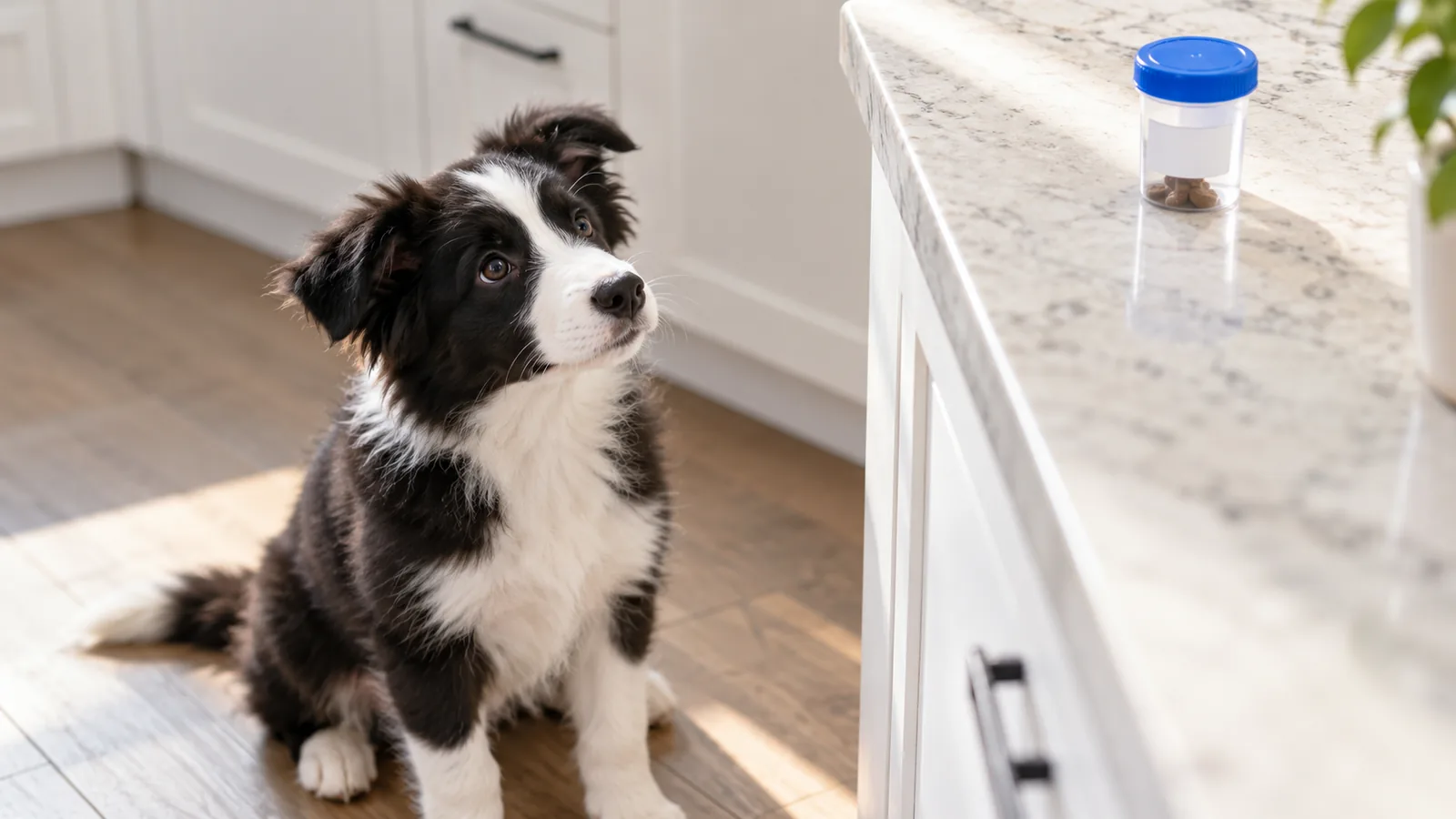
Yesterday's sample still tells us something, but fresher is better, because cysts and larvae break down as the surface dries. A tablespoon or so is plenty. Seal it in a bag or clean container, keep it in the refrigerator rather than the freezer if you can't come straight in, and tell us roughly when it was passed.
Is an Antigen Test the Same Thing as PCR?
An antigen test and a PCR panel are two different tools. An antigen test hunts for the proteins of one target organism, which makes it focused and quick when Giardia is the suspicion. PCR picks up DNA from dozens of organisms at a reference laboratory, so it covers far more ground and takes longer to come back. Plenty of cases get a float first, with a broader panel only if that answer doesn't fit.
Does My Pet Need Testing If They Never Leave Our Fenced Yard?
A private yard lowers the odds without removing them. Soil holds zoonotic parasites, the ones that can pass to people, for months after the stool that carried them has disappeared, so a fenced yard in the Poconos with no other dogs in it is still a real source of exposure. Rabbits, rodents, and birds cross that fence all day, and hunting cats bring parasites home inside what they catch. Picking up stool daily keeps the load in that soil from building.
How Often Should a Healthy Pet Have a Stool Test?
Most healthy adult dogs and cats get a stool check once a year with their wellness exams. Puppies and kittens need checking more often while they're growing, since they're both the likeliest to carry worms and the least able to tolerate them. Pets who hunt, swim, board, or live alongside several other animals do better with more frequent screening.
Getting Your Pet the Right Test the First Time
Tracking down the cause of loose stool can take more than one sample and more than one visit, and it helps to have a team you can ask along the way. Bring us a sample, and our team at Creature Comforts Veterinary Service in Saylorsburg will match the test to your pet's age and symptoms and talk through what the result means for everyone in the house. If your dog or cat takes a turn overnight, call us at any hour.